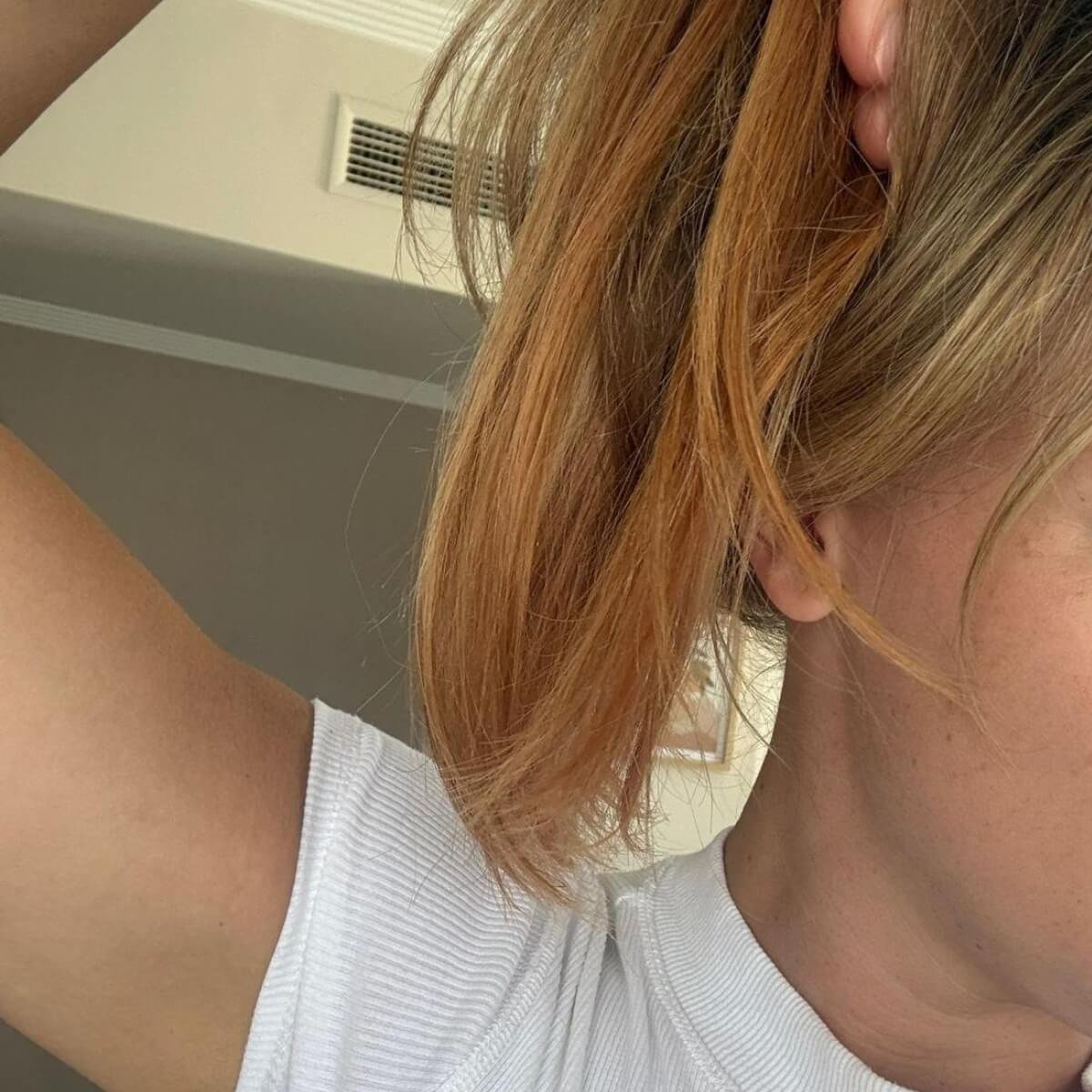
The best sunscreen for hair extensions is a mineral formula with zinc oxide or titanium dioxide as the only active ingredient, and no avobenzone or octocrylene anywhere on the label. Those two chemical UV filters are the reason blonde extensions turn pink, peach, or orange after a sunny day, which we go into in more depth in our guide on hair extensions turning pink and orange. Mineral sunscreens sit on top of the skin instead of being absorbed, so they’re far less likely (next to impossible) to transfer onto your hair and trigger a reaction.
Five tried and tested mineral sunscreens we recommend to clients at Beauty Club London:
- Supergoop! Mineral Unseen Sunscreen SPF 40 (face, completely invisible)
- Augustinus Bader The Sunscreen SPF 50 (face, luxury, no white cast)
- Sun Bum Mineral SPF 50 (body, zinc oxide only)
- Blue Lizard Sensitive Mineral SPF 50+ (body, fragrance-free)
- Thinksport Mineral Sunscreen SPF 50+ (body, family-friendly)
Below, we’ll walk through the ingredients to avoid, the differences between products, and the small details (like checking your daily moisturiser) that catch most clients out.
What Ingredient In Sunscreen Is Bad For Hair Extensions?
There are two main culprits, and both belong to a family of chemicals known as chemical UV filters.
Avobenzone
Avobenzone is the primary offender. When it transfers from your skin onto your extensions and is then exposed to UV light, it breaks down and reacts with the trace minerals (like iron and copper) that build up on the hair shaft, leaving a permanent pink, peach, or orange stain. We’ve covered the full mechanism in our guide on why hair extensions turn pink if you want the science behind it.
The tricky part is that avobenzone hides under several different names on ingredient lists. Look out for any of these:
- Avobenzone
- Butyl Methoxydibenzoylmethane
- BMDBM
- Parsol 1789
- Eusolex 9020
- 4-tert-Butyl-4′-methoxydibenzoylmethane
If any of these appear on the back of a bottle, put it back on the shelf ASAP, unless you’re a fan of discolouration.
Octocrylene
Octocrylene is the second ingredient to avoid. It’s often paired with avobenzone in chemical sunscreens because it helps stabilise it, but it also contributes to the same discolouration problem on hair extensions. The two together create the perfect conditions for a colour reaction you definitely didn’t book in for.
Check Your Moisturiser, Too
This catches a lot of people out. Avobenzone isn’t only in sun cream. It’s commonly added to daily facial moisturisers with SPF, tinted moisturisers, BB creams, and primers. If you wear an SPF moisturiser every morning and tuck your hair behind your ears, the front sections and face-framing pieces of your extensions are the first to turn pink. Always check the active ingredients on every skincare product that lives near your hairline, not just the bottle you pack for holiday.
Mineral vs Chemical Sunscreen: What’s The Difference?
Sunscreens fall into two broad categories. Chemical sunscreens absorb UV rays and convert them into heat, which is then released from the skin. Mineral sunscreens (sometimes called physical or natural sunscreens) sit on top of the skin and reflect or scatter UV rays away from the body, working as a barrier rather than being absorbed.
The practical difference for anyone wearing hair extensions is simple. Chemical filters absorb into the skin, sweat off, transfer onto your hair, and react with UV light. Mineral filters stay on the surface and rinse off cleanly. They also tend to be a gentler choice for sensitive skin, which is an added bonus.
The trade-off, historically, was the white cast. Mineral sunscreens can leave a pale, ghostly tint on the skin if they’re not rubbed in properly. Modern formulations have come a long way and several now apply almost invisibly, but it’s worth knowing before you buy.
Best Mineral Sunscreen For Hair Extensions
These are the products we actually recommend to clients. They’re all 100% mineral, contain no avobenzone or octocrylene, and have been chosen for a mix of face, body, and budget needs.
| Product | Active Ingredients | Best For | White Cast |
|---|---|---|---|
| Supergoop! Mineral Unseen Sunscreen SPF 40 | Zinc Oxide | Face, daily wear under makeup | None, completely invisible |
| Augustinus Bader The Sunscreen SPF 50 | Zinc Oxide, Titanium Dioxide | Face, luxury daily wear | None |
| Sun Bum Mineral SPF 50 | Zinc Oxide | Body, beach, holidays | Light, blends with effort |
| Blue Lizard Sensitive Mineral SPF 50+ | Zinc Oxide, Titanium Dioxide | Body, sensitive skin | Moderate |
| Thinksport Mineral Sunscreen SPF 50+ | Zinc Oxide | Body, sport, families | Moderate |
Supergoop! Mineral Unseen Sunscreen SPF 40
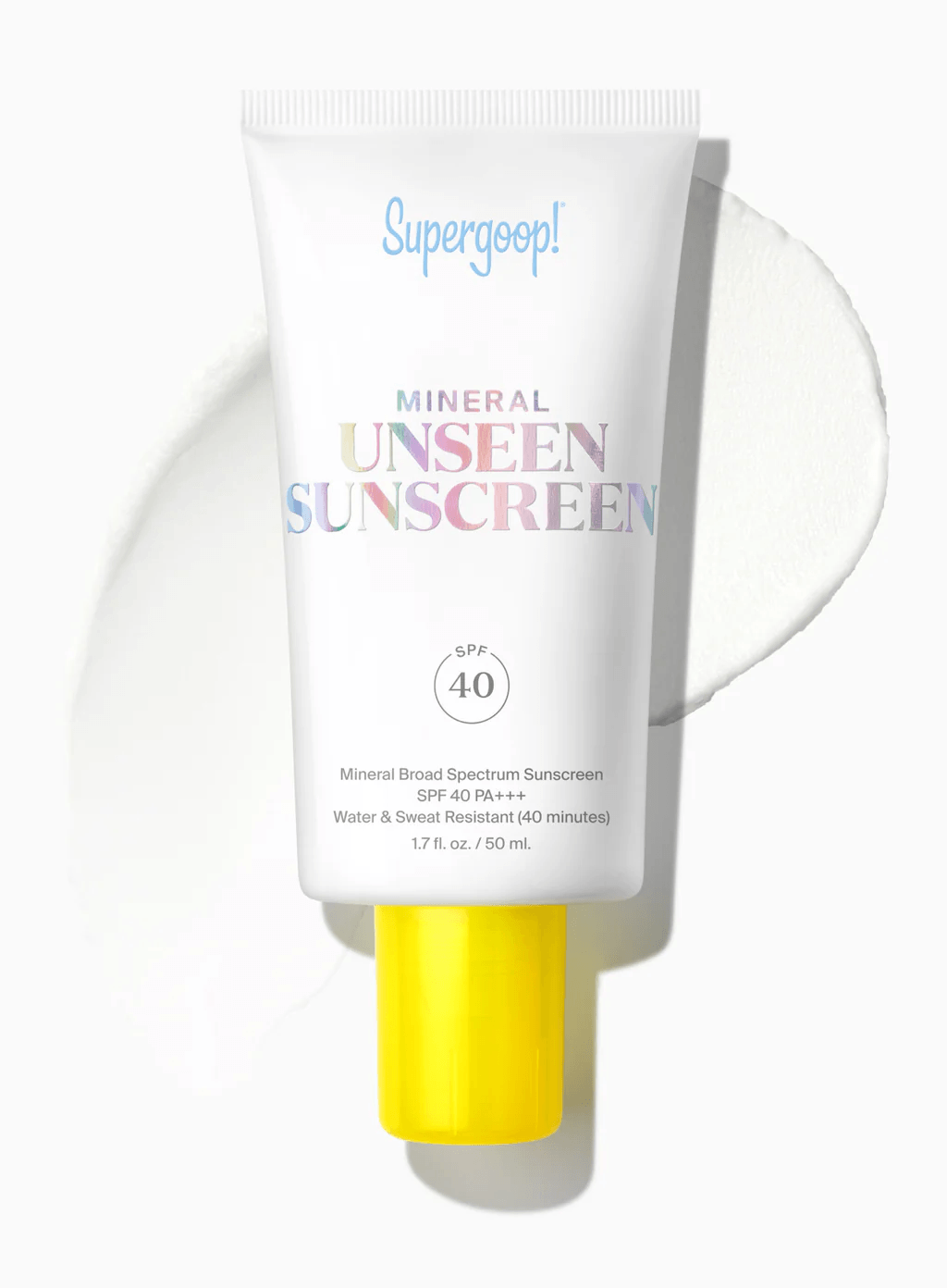
For day-to-day SPF that sits invisibly under makeup, this is the one our clients reach for most. It’s a clear gel-cream that disappears into the skin with no white cast, which makes it a rare find in the mineral category. Perfect if you wear SPF every morning and don’t want to think about whether it’s going to transfer onto your hair.
Active ingredient: Zinc Oxide Best for: Face, daily wear under makeup
Shop Supergoop! Mineral Unseen at supergoop.com
Augustinus Bader The Sunscreen SPF 50
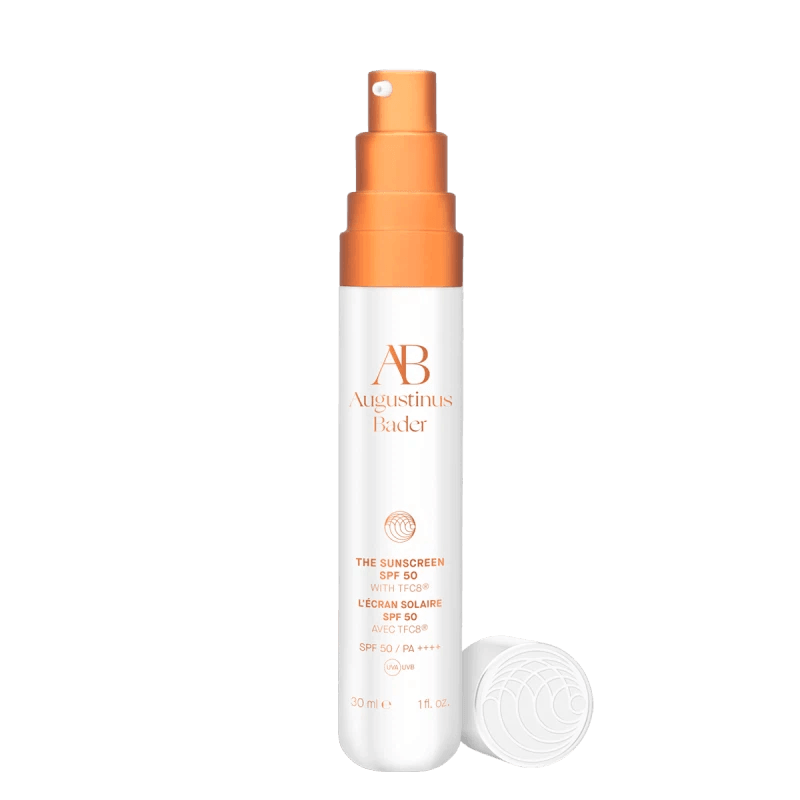
If you’re after something more luxurious, this is beautiful to wear. It’s invisible on every skin tone, hydrating, and uses both zinc oxide and titanium dioxide for broad-spectrum protection. A serious investment compared to most sunscreens, but if you already have an Augustinus Bader skincare routine, it slots in nicely alongside the rest of the line.
Active ingredients: Zinc Oxide, Titanium Dioxide Best for: Face, luxury daily wear
Shop Augustinus Bader The Sunscreen at augustinusbader.com
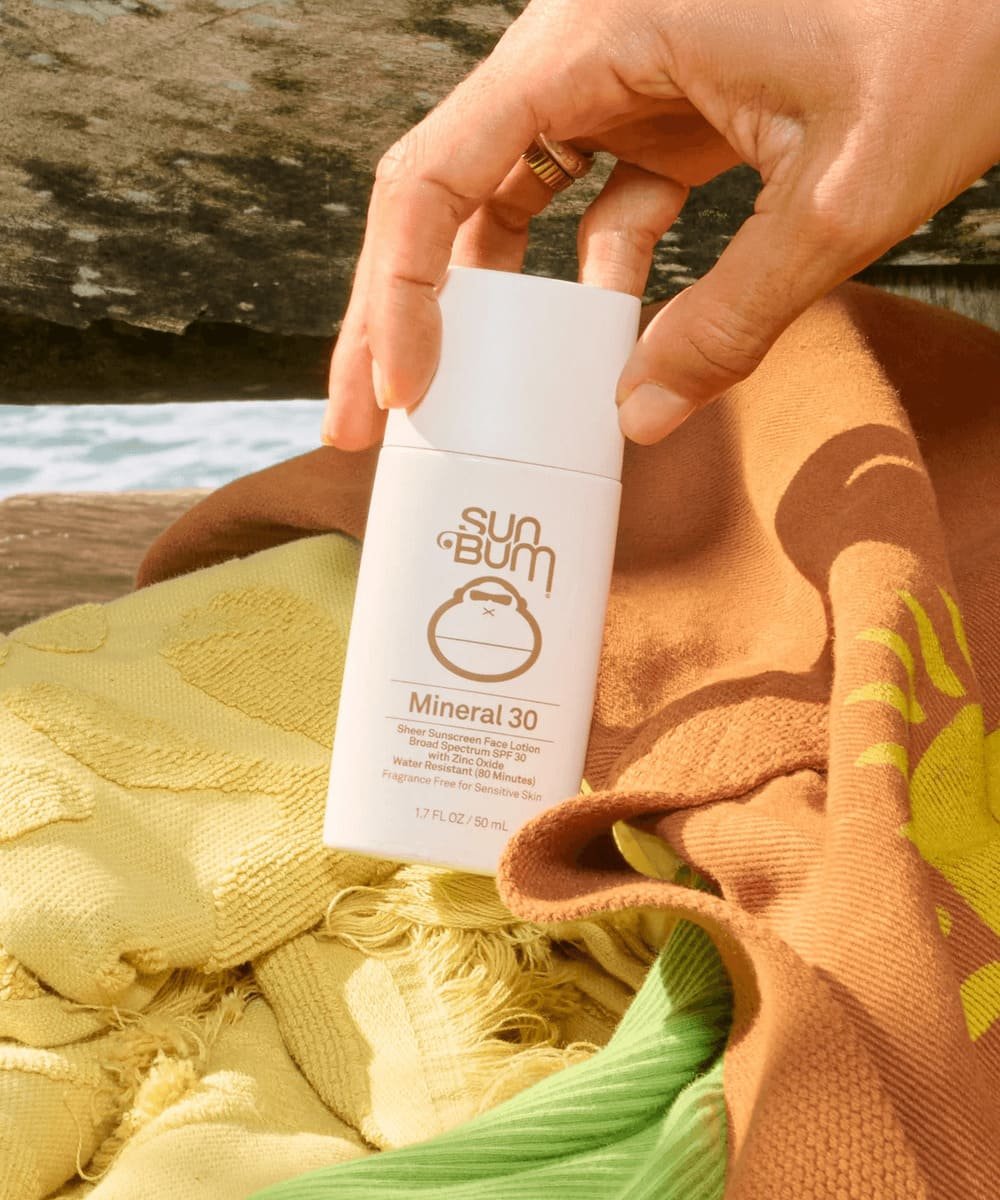
Sun Bum Mineral SPF 50
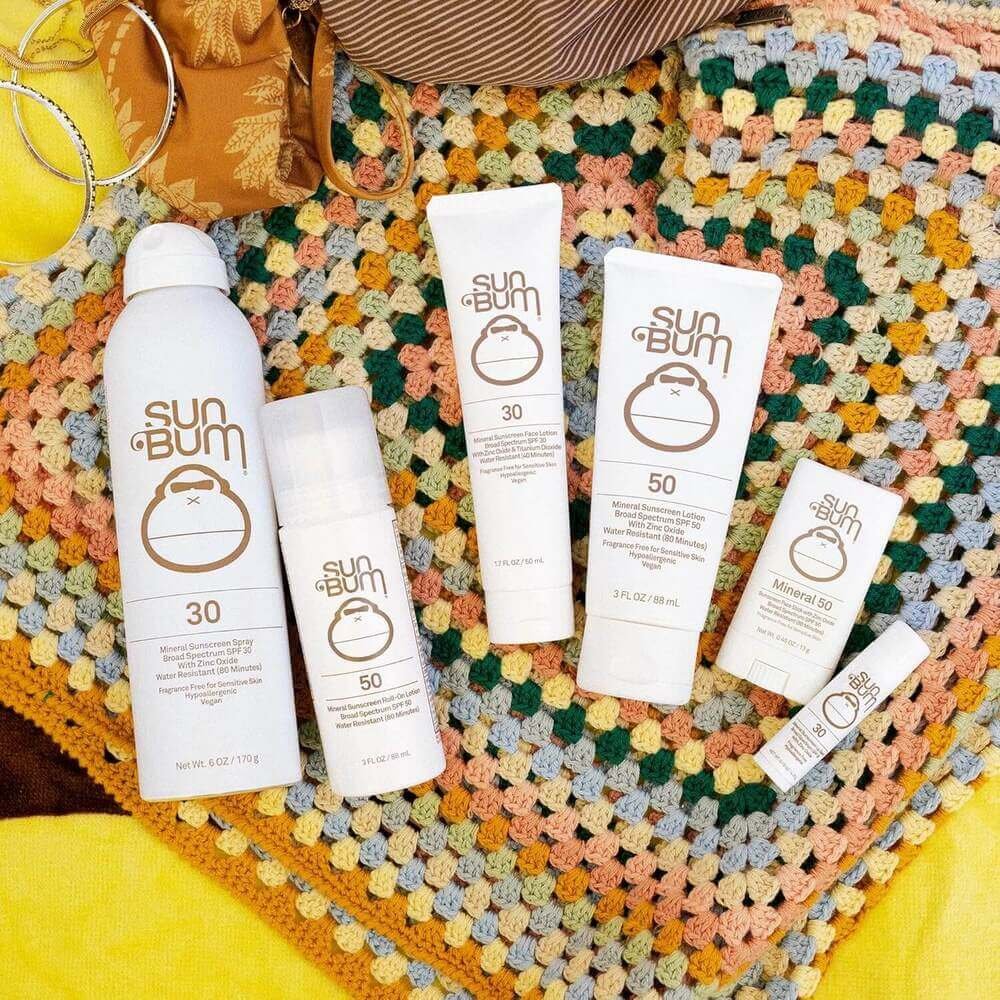
Uses zinc oxide as its only active ingredient (it’s worth flagging that this is the Mineral line, not the Original Sun Bum range, which is chemical and not safe for extensions). Lightweight for a mineral formula and comes in lotion, spray, and roll-on formats.
Active ingredient: Zinc Oxide Best for: Body, beach, holidays
Shop Sun Bum Mineral at amazon.com
Blue Lizard Sensitive Mineral SPF 50+
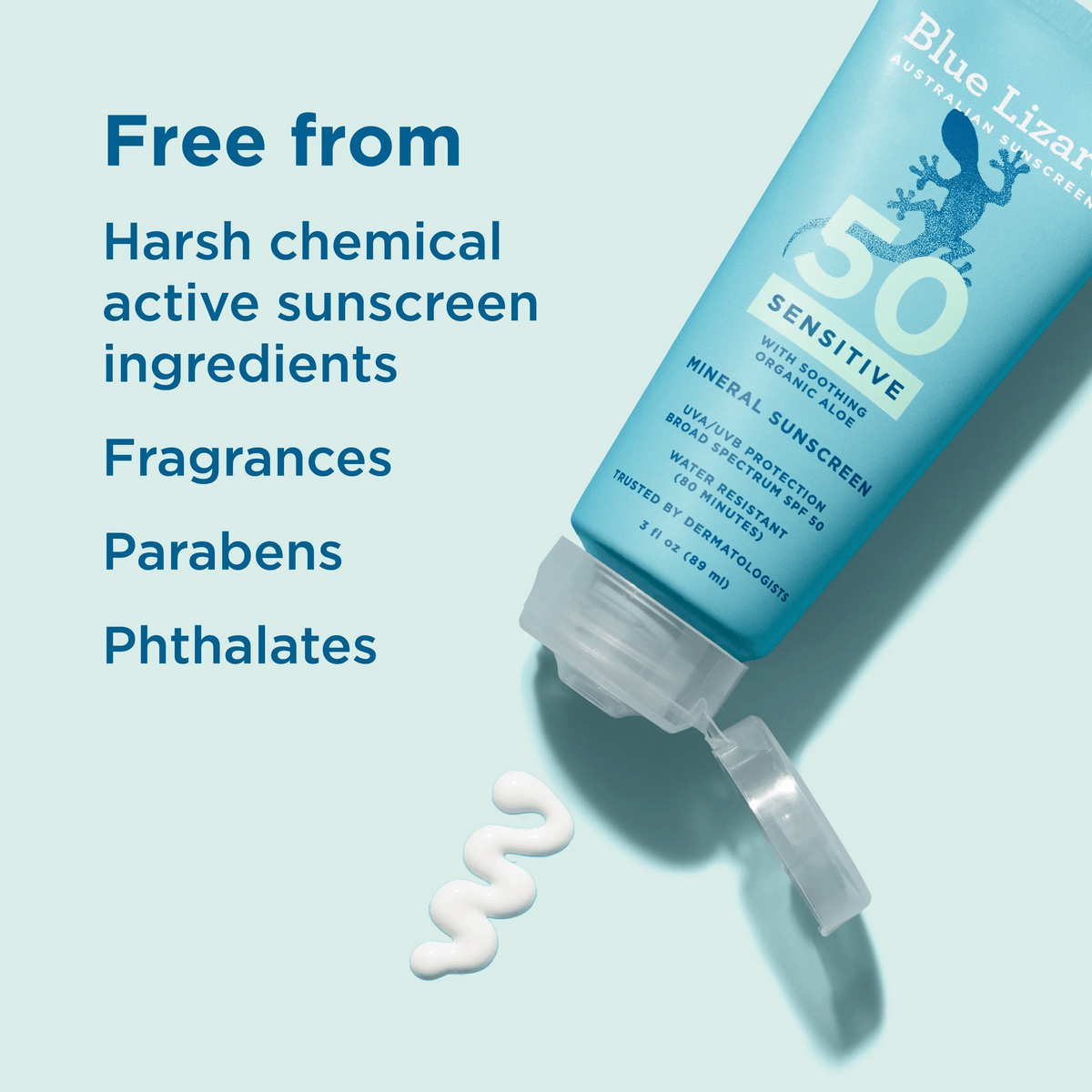
A dermatologist favourite, made with zinc oxide and titanium dioxide. It’s fragrance-free and water-resistant, which makes it a strong choice if you’re sensitive to perfumes or planning a pool-and-beach holiday. Their colour-changing Smart Cap is a nice touch, too.
Active ingredients: Zinc Oxide (10%), Titanium Dioxide (8%) Best for: Body, sensitive skin
Shop Blue Lizard Sensitive at amazon.com
Thinksport Mineral Sunscreen SPF 50+
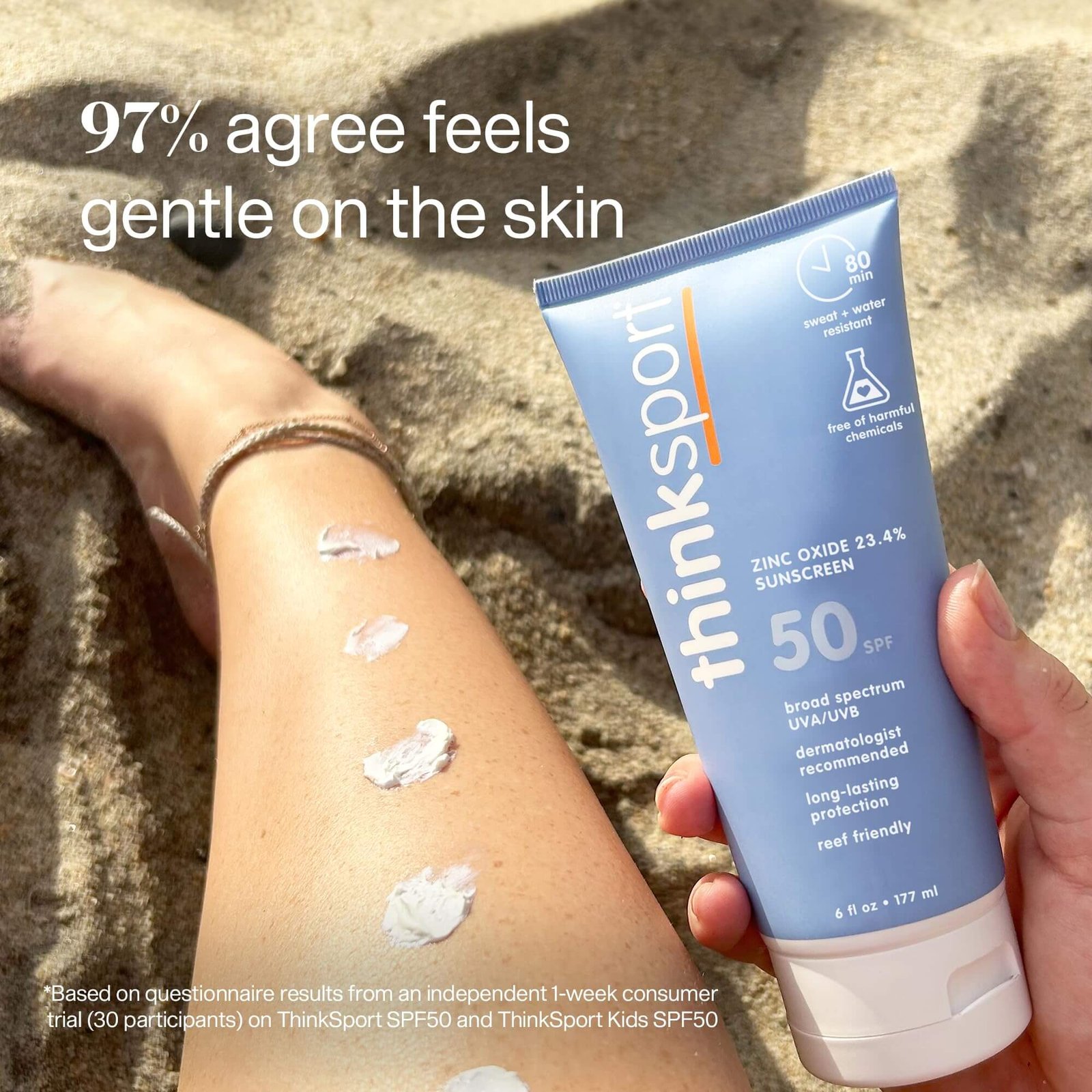
Widely loved for sport, swimming, and family use. It’s zinc oxide-based, water-resistant for 80 minutes, and has a slightly thicker texture that holds up well in heat.
Active ingredient: Zinc Oxide Best for: Body, sport, families
Shop Thinksport Mineral Sunscreen
Is Sun Bum Sunscreen Safe For Hair Extensions?
It depends entirely on which Sun Bum product you buy. The brand sells two distinct lines: the Original range, which is chemical and contains both avobenzone and octocrylene, and the Mineral range, which uses zinc oxide as its only active ingredient. The Mineral line is safe for hair extensions. The Original line is not.
The packaging looks similar at a glance, so check carefully. Sun Bum Mineral products are usually in white or pale-coloured bottles clearly labelled “Mineral” on the front. If you can’t see the word “Mineral” on the bottle, assume it’s chemical and look at the active ingredients on the back before buying.
Is Blue Lizard Sunscreen Safe For Hair Extensions?
Yes, Blue Lizard’s Sensitive Mineral range is safe for hair extensions. It uses zinc oxide (10%) and titanium dioxide (8%) as its only active ingredients, with no avobenzone or octocrylene. It’s fragrance-free, paraben-free, and developed specifically for sensitive skin.
Blue Lizard does also make non-mineral formulas, so as always, read the label rather than relying on the brand name. If the active ingredients are zinc oxide and titanium dioxide only, you’re good to go.
The “White Cast” Problem (And How To Get Around It)
The most common complaint with mineral sunscreens is the pale, slightly ghostly cast they can leave on the skin if they’re not rubbed in fully. It’s caused by the zinc oxide or titanium dioxide particles, which are visible to the eye, especially on deeper skin tones. The good news? It won’t turn your extensions pink or orange. It’s purely a cosmetic issue with the skin, not a hair issue.
If white cast is a dealbreaker for you, focus on the newer-generation invisible mineral formulas. Supergoop! Mineral Unseen and Augustinus Bader The Sunscreen are the two we hear back about most from our clients. They use micronised zinc oxide and clever formulation chemistry to disappear entirely on the skin.
For body application, where a slight cast is less of an issue, the chunkier mineral formulas like Thinksport or Blue Lizard are usually fine, especially once they’ve had a few minutes to settle.
How To Apply Sunscreen Safely With Hair Extensions
Switching to a mineral sunscreen does most of the heavy lifting, but a few application habits go a long way to keeping your extensions protected.
- Tie your hair up before you apply. Whether it’s a low pony, a bun, or a claw clip, getting your hair off your shoulders and neck before applying SPF stops any product from rubbing onto the hair.
- Let it absorb properly. Even mineral sunscreens benefit from a few minutes to settle on the skin before you let your hair down. This is doubly important for the face, where moisturisers, primers, and SPF can all transfer onto face-framing pieces.
- Rinse your hair after the beach or pool. A quick rinse with fresh water washes off any product residue, salt, or chlorine before it builds up. Our hair extensions on holiday guide has more detailed travel advice if you’re packing for a trip.
- Reapply with the hair away. If you’re reapplying SPF throughout the day, do the same thing every time. It feels fussy at first but becomes automatic.
- Consider a UV-protective hair spray. A leave-in spray with UV filters (avobenzone-free, of course) adds an extra layer of defence on full beach days. They’re particularly worth it for blondes, where any discolouration shows up fastest.
Other Habits That Protect Your Extensions In The Sun
Sunscreen choice is the single biggest factor, but extensions live in an ecosystem of products that can interact with each other. Perfume sprayed on the neck and chest can react with the hair too, so spritz before you style or sweep your hair forward first. Pool chlorine and sea water both leave hair more porous, which makes any subsequent chemical contact more reactive. If you’re swimming regularly on holiday, our swimming with hair extensions guide covers how to protect them in the water.
A consistent hair extensions aftercare routine matters more in summer than at any other time of year, because the combination of heat, UV, sweat, and skincare creates the conditions where discolouration takes hold fastest.
Book A Consultation With Beauty Club London
If your extensions have already started to turn or you’re not sure whether your current sunscreen is causing a reaction, send us a message with a photo of your hair in natural light. We’ll take a look and tell you whether it’s something that can be lifted with a chelating treatment or whether you’d be better off with a fresh set. Our team fits and cares for hair extensions for clients across London, and we’d rather you ask before a holiday than after.
Frequently Asked Questions
Are there any safe chemical sunscreens for hair extensions?
Not really, no. The two ingredients responsible for the discolouration, avobenzone and octocrylene, are in almost every chemical sunscreen on the market. Even chemical formulas marketed as “reef safe” or “sensitive” usually still contain at least one of them. If you want to be confident your extensions are protected, sticking to 100% mineral formulas is the simplest rule.
Can I use a chemical sunscreen if I keep it away from my hair?
No, not really. Avobenzone transfers far more easily than most people expect. It can move from your hands, your shoulders, your face, or your pillow at night onto your hair, and even small amounts can cause discolouration once UV hits them. The safer answer is to switch your skincare to mineral-only, particularly anything applied to the face, neck, and chest.
Does SPF level affect whether a sunscreen is safe for hair extensions?
No, SPF level is unrelated. What matters is the active ingredients, not the SPF number. A mineral SPF 30 with zinc oxide is safe for extensions; a chemical SPF 50 with avobenzone is not. Always read the active ingredients panel before checking the SPF.
Are spray sunscreens safe for hair extensions?
Spray sunscreens are generally riskier because the fine mist drifts further and lands on your hair more easily than lotion does. If you prefer a spray, choose a mineral one (Blue Lizard and Sun Bum both make mineral spray formats) and direct it firmly downward, away from your hair, with your extensions tied up and out of the way.
Do I need to wash my extensions after wearing sunscreen?
A gentle rinse with fresh water after the beach or pool is a good habit, even with mineral sunscreen. If you’ve been wearing chemical sunscreen and noticed any product transfer, wash with a clarifying or chelating shampoo for hair extensions as soon as possible to remove any residue before UV exposure has a chance to trigger a reaction.