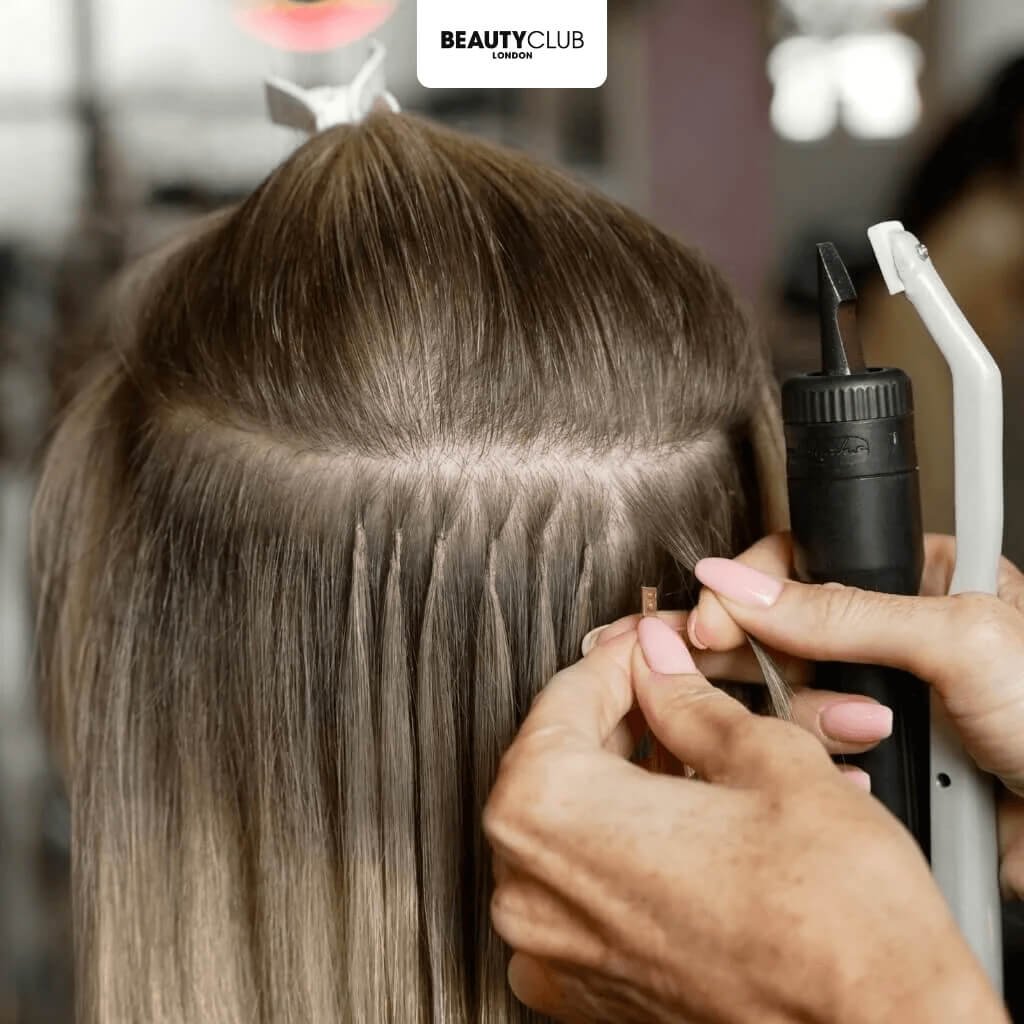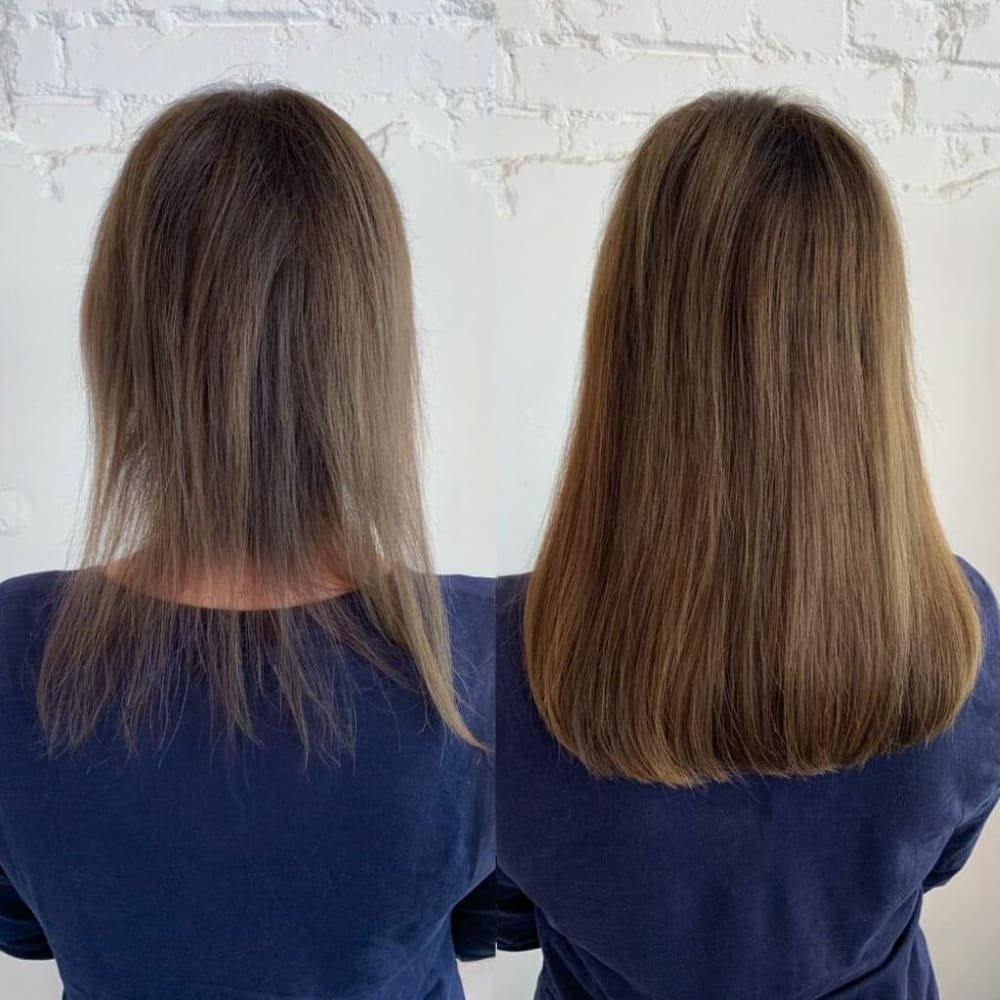
If thinning hair is stealing your confidence, you’re not alone. Around 40% of women will experience hair loss by the age of 50, according to the National Library of Medicine, whether due to age, childbirth, or over-processing with harsh chemicals like bleach. Seeing your hair lose volume can make you feel less like yourself. The good news is that choosing the correct hair extensions can add instant length and volume, giving you the freedom to create any hairstyle while prioritising the health and recovery of your natural hair.
This guide covers everything you need to know about hair extensions for thin hair, from the most common causes of thinning to the safest methods and the ones you should avoid.
Can You Have Hair Extensions With Thin or Fine Hair?

Yes, hair extensions are safe for fine or thinning hair when fitted using a lightweight method that distributes weight across a wide section of your natural hair. Tape-in and clip-in extensions are the two options we recommend most often at Beauty Club London, because both spread weight evenly across a wide attachment area of around 30-40mm. Single-bonded methods such as micro rings and bonded extensions work very differently: the attachment point is just 3-5mm across, which creates a heavily unbalanced ratio between the amount of extension hair being carried and the small section of natural hair supporting it.
The method isn’t the only factor though. We asked our Extensions Director, Louise Bailey, to explain how the application plays an equally important role:
“The biggest factor in whether extensions damage your hair isn’t just the method, it’s the experience of the person fitting them. A tape-in fitted incorrectly can cause just as much damage as a badly fitted set of bonded extensions. What we see most often at the salon is clients coming in with breakage because their extensions were placed too close to the scalp, fitted too tightly, or applied to unsectioned hair, which causes the natural hair to twist and pull against the scalp over time. The method has to suit your hair, and the application has to be done by someone who has specialist experience working with fine hair.”
Over the years, we have helped hundreds of clients grow back thicker, healthier natural hair while continuing to wear extensions, including many who came to us after damage caused by incorrect application at other salons.
The Best Hair Extension Methods for Thin Hair
For fine and thinning hair, tape-in extensions and clip-in extensions are the two safest options. Both spread the weight of the added hair across a wide section of natural hair rather than concentrating it onto a small section, and when applied by an experienced specialist, they protect the health of your natural hair while you wear them. Here’s how each method works and who it suits.
Tape-In Extensions
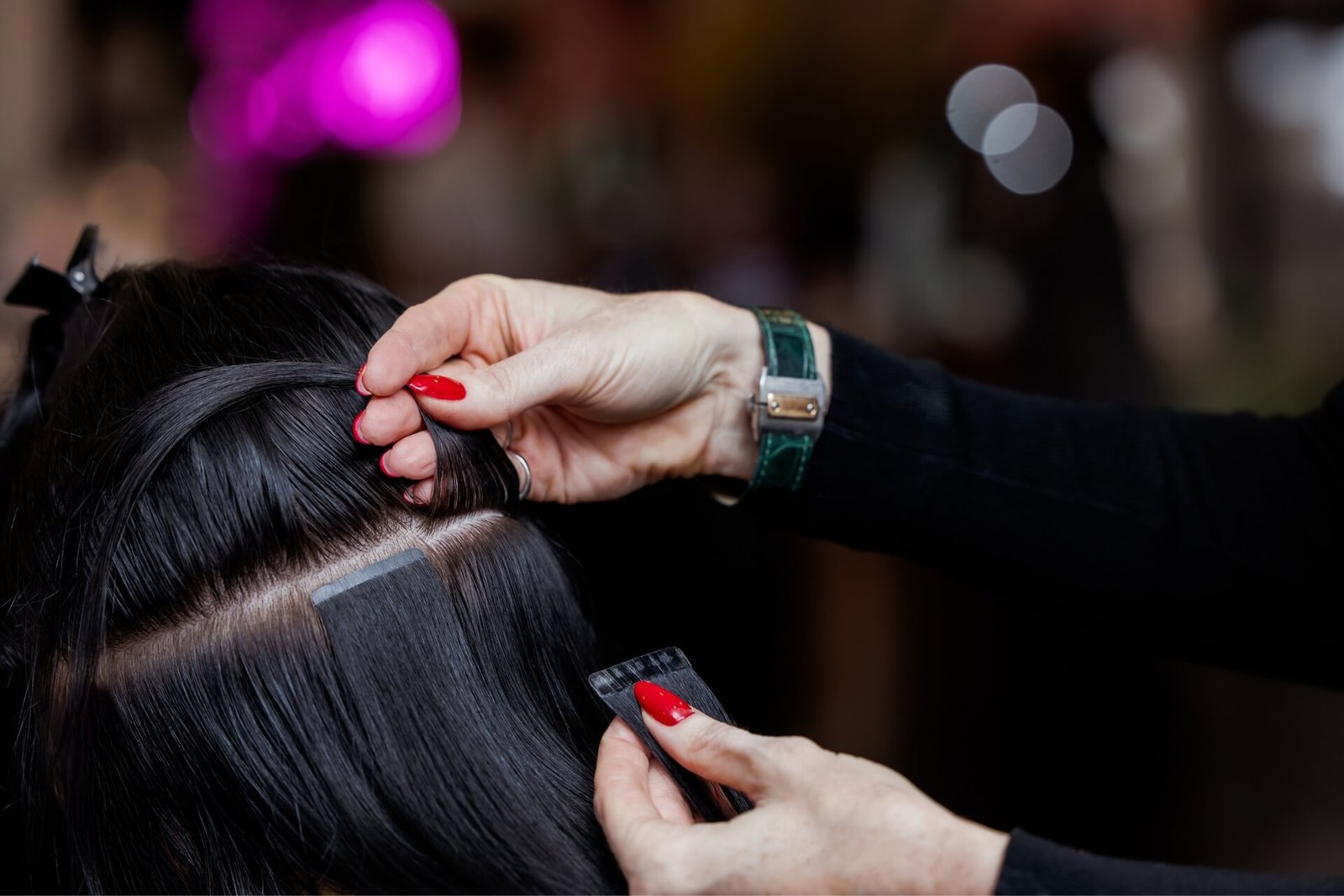
Tape-in extensions are what we fit most often on fine and thinning hair at Beauty Club London. Each tape weft is around 30-40mm wide, which means the weight of the added hair is spread across a much bigger section of your natural hair than any single-bond method could manage.
How they work: Medical-grade adhesive wefts are sandwiched around small sections of your natural hair, one above and one below, creating a flat attachment that sits flush to the scalp. The application takes around 90 minutes and uses no heat. Wefts can be removed with a specialist solution, repositioned, and refitted several times before they’re replaced.
Best for: Everyday long-term wear on fine or thinning hair where you want invisible placement and minimal fuss between refits.
Pros
- Weight is distributed evenly across the full width of the weft.
- Higher-end tape-ins use medical-grade adhesive, with no heat or metal in the application.
- Sit flush to the scalp, invisible even when the hair is parted.
- Reusable, can be refitted every six to eight weeks using the same hair.
- Suitable for hair lengths of around 3-4 inches and upwards. Our guide on how long your hair needs to be for extensions covers the specifics.
- Long-lasting, more cost-effective over a year of wear than other methods.
Cons
- Require an experienced specialist for correct placement in order to be undetectable.
- Need to be refitted every six to eight weeks to keep the weight distributed correctly.
Clip-In Extensions
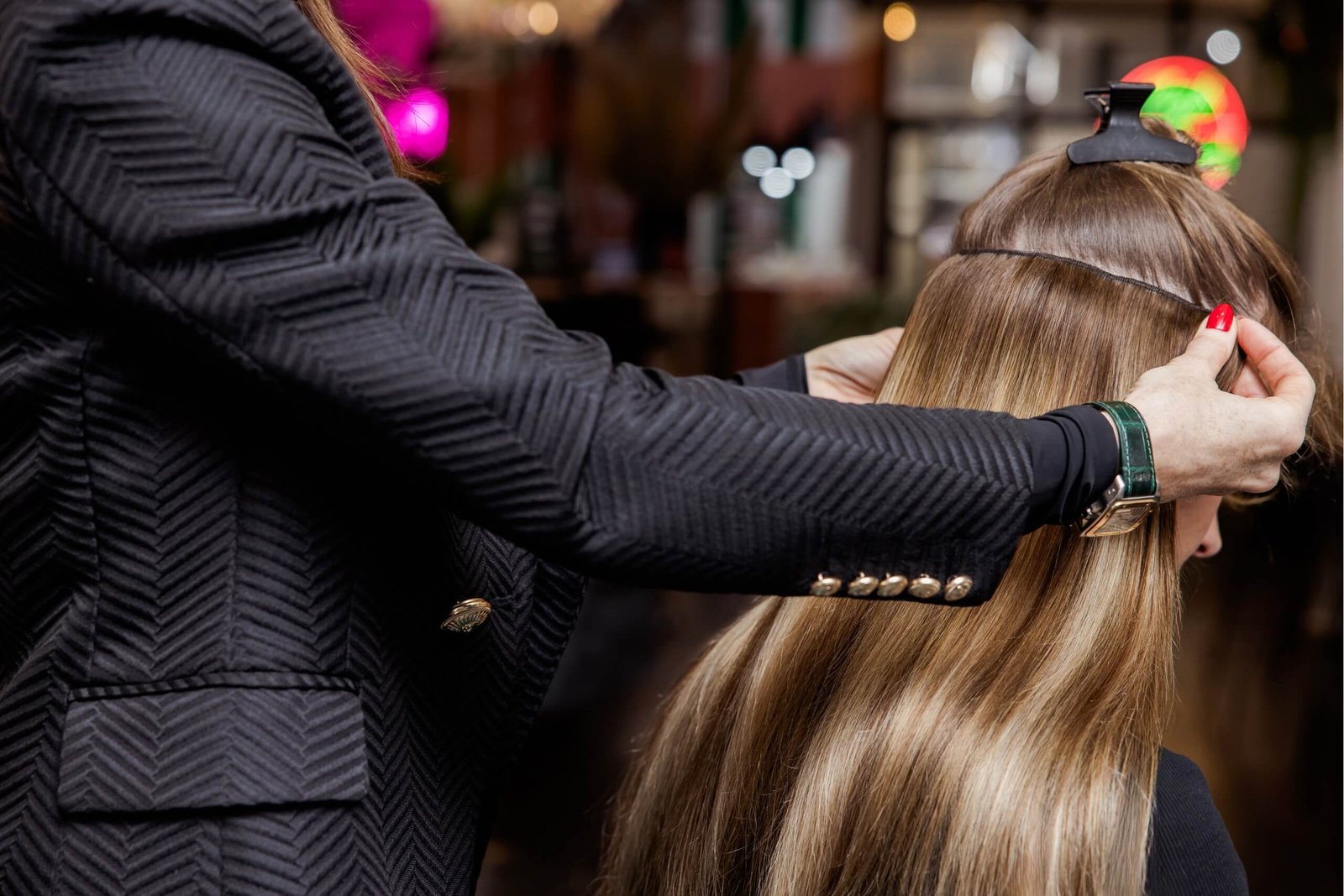
Clip-in extensions are the most versatile option, letting you add volume on the days you want it and leave your natural hair free on the days you don’t.
How they work: Pre-wefted pieces with small clips secure onto sections of your own hair. You fit them yourself at home, then remove them whenever you like. There’s no adhesive, no heat, and no tension between wears.
Best for: Occasional wear, special events, and extra volume on thin hair without any long-term commitment.
Pros
- No adhesive, heat, or continuous tension on the natural hair.
- Worn occasionally and removed at the end of the day, giving your natural hair and scalp a rest between wears.
- Much lower initial cost than any semi-permanent method.
- A favourite for bridal styling on thin hair. Our wedding hair extensions guide covers this in more detail.
Cons
- Self-fitting is a selling point for most hair types, but on thin or thinning hair we recommend having them fitted by a specialist before any important event to avoid tension in the wrong places.
- If you’re ordering the hair online, they will often be pre-styled, so you’ll need to ensure the texture matches your natural hair.
Halo Extensions
Halo extensions work differently from every other method on this list. A clear wire loops around the head like a headband, with the weft of hair hanging from it, so nothing attaches directly to your natural hair.
How they work: You put the wire on in the morning, cover it with the top layer of your own hair, and remove it at night. Because there’s no adhesive, heat, or metal attached to the hair, halos place minimal tension onto the natural hair.
Best for: Quick, fuss-free daily volume without attachment directly to your natural hair.
Pros
- Nothing attaches directly to the natural hair, so there is minimal strain on individual strands.
- Takes seconds to put on once you’re used to installing them.
- Fully removable at home.
- The wire spreads the weight across the whole head rather than pulling in one spot.
Cons
- Only adds volume through the back and sides.
- Sits relatively high on the head.
- Can shift with movement.
- Very fine hair on top may struggle to cover the wire cleanly.
- Not suitable for high ponytails or up-dos.
- Clip-ins tend to be the easier choice on thin hair for a fully removable option with more styling range.
Hair Extension Methods Compared at a Glance
For a quick side-by-side comparison of every method, see the table below.
| Method | Weight distribution | Suitable for fine hair? | Longevity | Heat required? | Damage risk |
|---|---|---|---|---|---|
| Tape-in | Wide (30-40mm weft) | Yes, the safest option overall | 6 to 8 weeks between refits, wefts reused | No | Very low |
| Clip-in | Across each weft | Yes, ideal for occasional wear | Daily wear, removed at night | No | Low |
| Halo | Wire, no attachment | Gentle but limited styling | Daily wear, removed at night | No | Very low |
| Keratin Bonds | Concentrated on a small bond | Only on higher-density fine hair | 3 to 4 months | Yes | Moderate to high |
| Micro / nano rings | Concentrated on a 3 to 5mm bead | Not recommended | 6 to 10 weeks between refits | No | Moderate to high |
| Sew-in weft | Concentrated along a tight braid | Not recommended | 6 to 8 weeks | No | High |
Hair Extension Methods to Avoid With Thin Hair

Micro Rings, Nano Rings, and Bonded Extensions
The table above shows these methods as moderate-to-high risk on fine hair, but most guides stop there without explaining why. Micro rings, nano rings, and bonded extensions can actually blend more discreetly on fine hair than tape-ins. The attachment points are smaller and require less skill to blend, they don’t show through the way a tape weft can if it’s fitted too close to the parting, and that’s exactly why some stylists may recommend them, and why clients with fine hair are often tempted by them in the first place. If someone has told you these methods will look more natural on your hair, they’re not wrong.
The problem is the trade-off, and on thin hair the trade-off is severe. Both methods concentrate the full weight of an extension onto a small section of natural hair, and because the average person sheds 50 to 100 hairs per day, by the time a refit is due, each attachment point is supported by noticeably less natural hair than when it was first fitted, concentrating even higher tension onto a smaller section.
Micro Rings
Micro rings (and their smaller version, nano rings) are small metal beads, around 3 to 5mm, that clamp a dense section of extension hair onto a small section of your natural hair.
How they work: The bead is threaded over both your natural hair and the extension, then clamped shut with pliers. The attachment point is small and discreet, making it easy to hide between fine hair.
Best for: Medium-to-thick hair types with enough density to support the weight at each ring. Not recommended for fine or thinning hair.
Pros
- Small, discreet attachment that is easy to hide between fine hair.
- No heat or adhesive involved in the application.
- Can last six to ten weeks between refits.
Cons
- Tension is concentrated onto a very small area, which is demanding on thin hair from the moment they are fitted.
- The beads can feel uncomfortable against the scalp, particularly when lying down.
- An imprecise fitting can cause the rings to slip, catch, or pull the natural hair out entirely.
- Maintenance must be kept to a strict schedule, because a late refit leaves even less natural hair supporting each ring due to natural shedding.
- Removal can reveal patchy breakage along the row lines and a visible band of thinner hair where the rings sat.
- Each ring is a separate attachment point rather than part of a continuous weft, which can make the extension hair look stringy or disconnected from your natural hair, especially when the hair moves or is styled.
Bonded Extensions
Bonded extensions follow the same pattern as micro rings. The bonds are small and discreet, which is part of the appeal, but the trade-off on thin hair is the same.
How they work: A keratin-tipped strand of extension hair is fused to a small section of your natural hair using a heated tool. Removal requires solvent to break down the keratin, followed by physical pressure to release the bond.
Best for: Higher-density fine hair at most, and even then only as a case-by-case decision. Not recommended for very fine or thinning hair.
Pros
- Small, discreet bonds that blend well on thin hair.
- Long-lasting, typically three to four months between refits.
- No metal in the attachment.
Cons
- Heat is used during application, which weakens the surrounding hair.
- Removal involves solvent and physical pressure, which often loosens nearby healthy hairs alongside the bond being removed.
- Each bond is a separate attachment point rather than part of a continuous weft, which can make the overall hair flow look stringy or misaligned.
If you’re currently wearing micro rings, nano rings, or bonded extensions on thin hair, this isn’t a reason to panic. If they’re fitted well, your hair underneath is in good condition, and you’re sticking to your maintenance schedule, you may be fine. But when the time comes for a refit, it’s worth having an honest conversation with your stylist about switching to tape-ins. You’ll keep most of the blending advantage, because a tape-in on thin hair is practically undetectable when fitted correctly, and you will significantly reduce the strain placed on your natural hair.
Sew-In Wefts and Weaves
A sewn weft is stitched onto a tightly braided section of your natural hair.
How they work: Your natural hair is tightly braided into cornrows, then the weft of extension hair is sewn onto these braids.
Best for: Very dense natural hair with enough strength to carry the tension of a braided base. Not recommended for fine or thinning hair under any circumstances.
Pros
- Fully removable when taken out professionally.
- No glue, tape, heat, or metal beads.
- Can look natural on dense, healthy hair when properly installed.
Cons
- The tension required to keep the stitching secure is significant, which can also cause itching and scalp discomfort.
- Traction alopecia along the braid line is common in clients who’ve worn weaves long-term.
- The braided section can feel heavy and restrictive day to day.
- The weft is stitched along a small section of hair, so the overall hair flow can look disconnected from the natural hair’s movement and styling direction.
- Even on healthy, dense hair, gentler alternatives are available.
Permanent Hair Extensions for Thin Hair
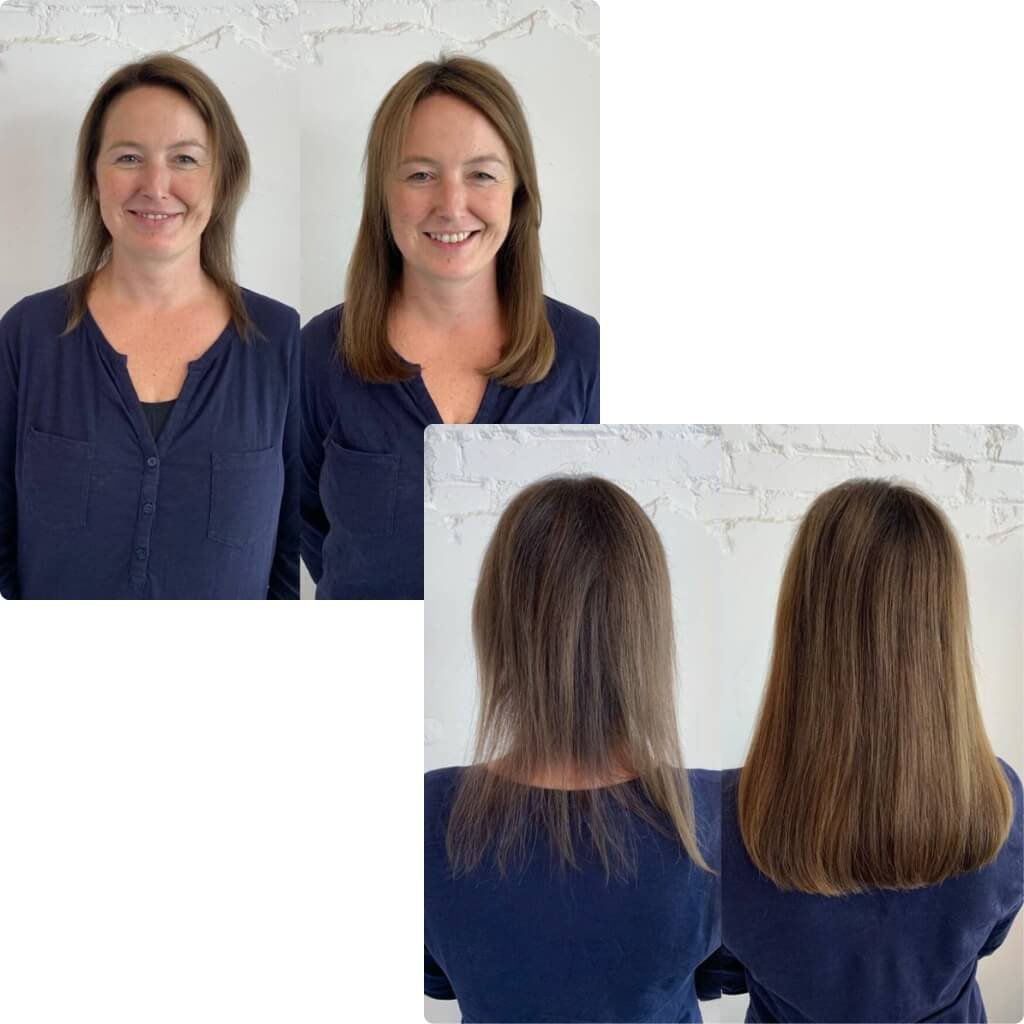
For permanent-feeling extensions on thin hair, tape-ins are the only method we recommend. When clients ask about permanent hair extensions, they usually mean extensions they can shower with, sleep in, and forget about for weeks at a time.
No extensions are truly permanent. Every method requires periodic maintenance to keep your natural hair healthy and the extensions looking their best, and on fine hair how often they need refitting matters more than how long they can physically stay in. Tape-ins are the closest thing to permanent without damaging thin hair, because the wide weft distributes weight evenly and no heat is involved in the application.
Bonded extensions last a similar length of time between refits, but the attachment point is far smaller and the application uses heat, which weakens the surrounding hair. We generally advise our clients with thinning hair to avoid bonds. Even during recovery, the decision needs careful consideration from a specialist.
If you’re set on long-wear extensions, tape-ins are the answer. They give you the same everyday freedom as bonded, without the added strain that single-bonded methods place on thin hair.
Hair Extensions for Thinning Hair on Top, the Crown, and the Parting
This is a common question our stylists are asked during extension consultations, and the straight answer is: extensions can’t be safely placed directly on the crown, parting, or hairline. There isn’t enough surrounding hair to hide them, and any tension applied to an already-thinning area will make the thinning worse.
What we do instead is fit the extensions slightly behind and below the thinning area, then style the existing hair on top to lie naturally over them. The extensions add visible density to the crown without ever actually attaching to the fragile hair there.
In practice, this means placing tape-in wefts along the mid and lower sections of the head where your natural density is strongest, and leaving the hair immediately around the parting and hairline untouched. The existing hair on top then acts as a covering layer, and because the added volume is sitting just underneath, the parting itself looks fuller even though nothing is attached to it. The result is density where you need it without tension where you can’t afford it.
Colour plays a bigger role here than most people realise. A soft root shadow, face-framing highlights, or a careful tonal match between the extensions and your natural hair can significantly reduce how visible the scalp appears through the parting.
“Face-framing tones and a well-placed root shadow can do as much for perceived density as the extensions themselves,” explains Moe Harb, Colour Director and Educator at Beauty Club London. “It’s about softening the contrast between the hair and the scalp, which is usually what makes thinning so visible in the first place.”
If your thinning is concentrated on top, you may also want to consider:
- Hair integration systems, which use a fine breathable mesh base to cover larger areas of the crown.
- Topper pieces, which clip in over the parting for occasional or daily wear.
Every pattern of thinning is different, and the right approach depends on factors that need to be assessed in person.
Hair Extensions for Hair Loss and Alopecia
For anyone with diagnosed alopecia or active hair loss, the rules shift. Extensions need a stable amount of natural hair to attach to, and adding weight to hair that’s currently shedding will accelerate the problem rather than hide it.
Our approach is always to wait for stability first. Post-chemotherapy regrowth is one of the situations we work with most frequently, and the team has also supported many women through postpartum shedding and stress-related telogen effluvium. The right moment to reintroduce extensions is when your doctor or trichologist confirms the active shedding has stopped and regrowth is underway. We do not advise bringing extensions in too early, because adding weight to hair that is still shedding can work against the recovery.
When extensions become an option again
Once the shedding has stabilised, the same rules apply as for any fine hair: tape-ins placed below the thinning area, fitted by someone with specialist experience, and refitted on a strict six-to-eight-week schedule. Wefts should be smaller and fewer than a full head would normally need, with placement focused on adding density where the regrowth is already strongest.
If you’re not there yet
While active shedding continues, attaching anything to fragile hair is the wrong move. The alternatives designed for this stage are:
- Hair integration systems. A fine breathable mesh base that covers larger areas of the scalp and doesn’t rely on attaching to individual strands.
- Human-hair toppers. Clip in over the crown or parting for occasional or daily wear, and lift off completely at night.
- Wigs. Full-coverage options with no attachment to the natural hair at all, useful during the most active phase of shedding.
Whichever option makes sense, the aim is always the same: to help you feel yourself again without putting any extra pressure on your hair.
What’s Actually Causing Your Hair to Thin?
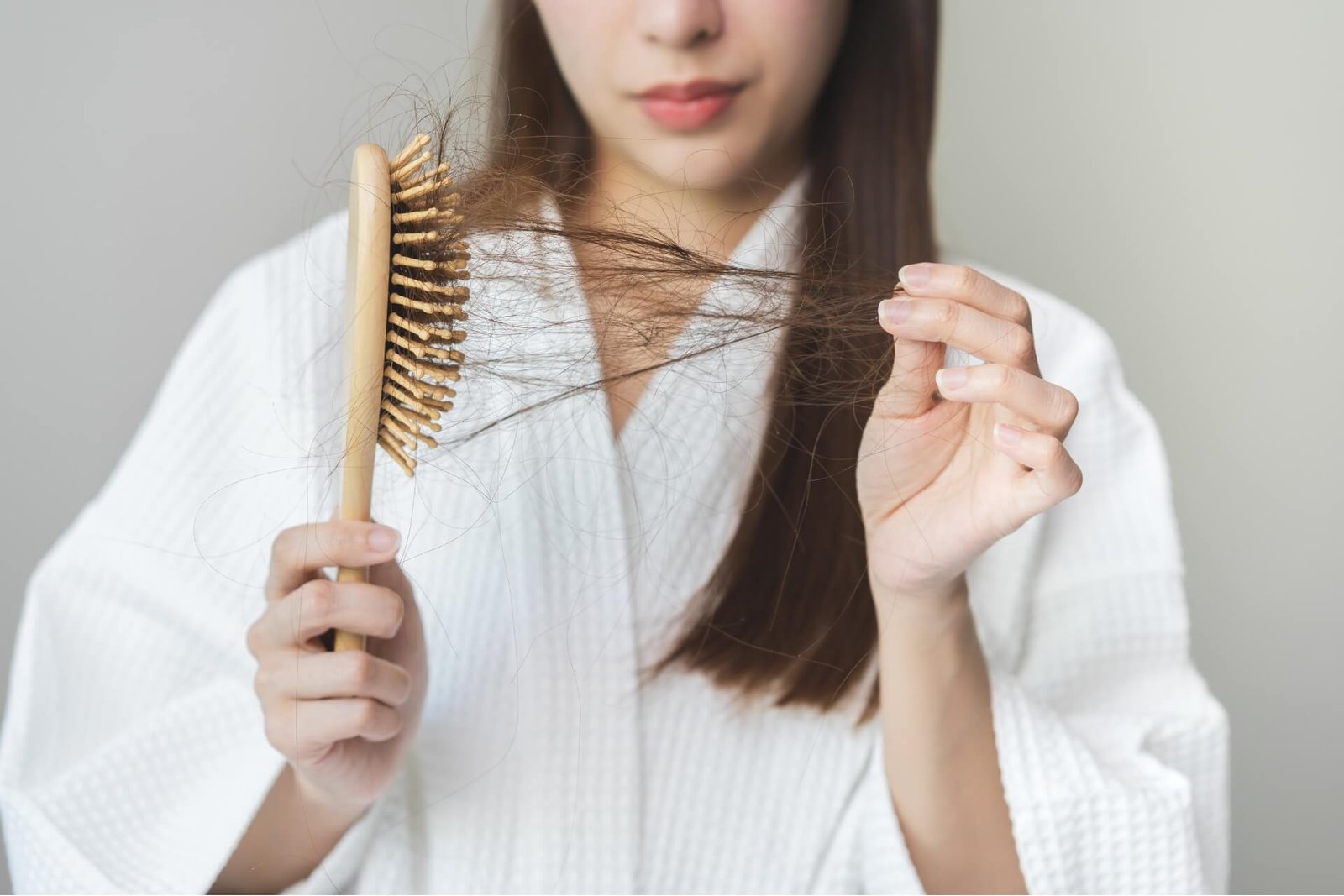
Understanding why your hair is thinning matters because it changes the advice. Some causes are temporary and resolve on their own, others leave the existing hair damaged but the follicles intact, and some require medical treatment before extensions should even be considered.
Lifestyle causes
These are the causes we see most often in the salon, and the good news is most of them are reversible.
- Incorrectly applied extensions. The most common cause we see in the salon. Extensions placed too close to the scalp, fitted too tightly, or applied without proper sectioning leave patches of thinner hair along the hairline, parting, or nape. Usually reversible once corrected by an experienced specialist.
- Over-processing and bleach damage. Over-bleaching weakens the hair shaft and causes breakage that looks identical to thinning. The follicles stay healthy, so new hair grows through strongly, and most clients see the biggest improvement once the damaged lengths have been cut off.
- Traction alopecia. Caused by tight ponytails, braids, buns, or years of wearing single-bonded methods like micro rings and bonded extensions that place constant tension on the hair. The hairline and nape are usually the first areas to thin. Swapping tight styles and tension-heavy extensions for gentler options usually helps.
- Stress and nutritional gaps. Stress, illness, and nutritional imbalances can all disrupt the hair growth cycle, with shedding often showing up three to four months after the trigger.
- Heat styling overuse. Daily high-heat styling weakens the cuticle, and on fine hair this breakage is often mistaken for thinning. Dropping the temperature, using a heat protectant, and swapping some heat sessions for air-drying will make a noticeable difference within weeks.
Medical causes
Medical causes need professional input before any extensions conversation starts.
- Androgenetic alopecia (female pattern hair loss). Hereditary and gradual, usually showing up as thinning across the crown and a widening parting rather than bald patches. Extensions can usually be worn alongside whatever treatment is being taken for it.
- Hormonal shifts. Pregnancy, postpartum, perimenopause, menopause, and thyroid changes all affect the hair growth cycle.
- Alopecia areata. An autoimmune condition that causes sudden, patchy hair loss in circular bald spots. Extensions aren’t usually advisable during an active flare, but once it has stabilised, many clients return to them.
- Post-chemotherapy regrowth. When hair returns after chemotherapy, it often comes through with a different texture, colour, or density than before. We work with post-chemotherapy clients regularly, and the early months of regrowth are when extensions can be transformative, adding length and volume while allowing your natural hair to recover and grow back strong.
- Medication side effects. Some prescriptions cause shedding as a side effect. If your thinning started within a few months of a new prescription, that may be the cause.
If you suspect a medical cause, see your GP or a trichologist before booking any extensions. The NHS hair loss guidance is a sensible first port of call. Extensions can absolutely play a role in rebuilding your confidence, but only once the underlying cause is being addressed.
How to Prevent Further Hair Thinning

If you’re experiencing hair thinning from any of the causes above, the right daily habits can make a big difference. The changes below are the ones we recommend to clients who want to improve the condition of their natural hair alongside wearing extensions.
- Address the cause first. No styling change will outpace an untreated medical issue, so if your thinning came on suddenly or is getting worse, seek expert advice before anything else.
- Feed your hair from the inside. A balanced diet supports healthy hair the way it supports the rest of the body. If you’re worried about nutritional gaps, speak to your GP before starting any supplements.
- Rethink your heat styling habits. Dropping your straightener or curling iron from 220°C to 180°C makes a noticeable difference to fine hair within weeks. Always use a heat protectant, swap a few heat sessions a week for air-drying, and give your hair one tool-free day every week to recover.
- Loosen up your hairstyles. Slicked-back ponytails, tight buns, and high-tension braids all pull on the hairline and are one of the most common causes of traction alopecia we see. If you love these styles, rotate them with looser options throughout the week and avoid sleeping in tight styles at all.
- Look after your scalp, not just your hair. A healthy scalp is where healthy hair grows from. Use a sulphate-free shampoo, massage your scalp when you wash to encourage circulation, and avoid heavy silicone products that can build up and block follicles over time. A gentle weekly scalp exfoliant can make a noticeable difference if you’re prone to buildup.
- Be honest with your stylist. If you’ve had hair loss from previous extensions, bleach, or any other reason, tell your new stylist everything at consultation. A good specialist will adapt the method, placement, and hair volume to protect the condition of your natural hair, and work with you on a plan to improve it over time.
How to Care for Extensions When You Have Thin Hair
The biggest mistake clients make with thin hair is treating their extensions the way they treat their natural hair. Extensions don’t benefit from the sebum your scalp produces, so they rely on you for the hydration, protection, and gentler handling that would normally happen automatically.
The non-negotiables:
- Brush from the ends upwards, never root-down. A soft-bristle extension brush is worth the investment. The how to brush hair extensions guide walks through the correct technique.
- Sulphate-free and alcohol-free shampoo and conditioner only. Sulphates dry out the hair and weaken the bonds. The shampoo for hair extensions guide covers exactly what to look for on an ingredients list.
- Never sleep on wet hair. The friction overnight tangles the extensions and pulls on the attachment points.
- Plait or loosely tie your hair before bed. More on this in the how to sleep with hair extensions guide.
- Go light on heat tools and always use protection. Fine hair is fine all the way through, including inside the wefts.
- Book maintenance every six to eight weeks. Skip this and the bond grows out, the weight redistributes onto a smaller anchor, and that’s when problems start.
Our hair extensions aftercare guide covers the full routine in depth.
Frequently Asked Questions
Below are the questions we get asked most often by clients considering hair extensions for fine or thinning hair.
What are the best hair extensions for very fine thin hair?
For very fine hair, lightweight tape-in hair extensions fitted in smaller rows are the best long-wear option, or clip-ins for occasional wear. Both spread the weight across a wide section of your natural hair, rather than concentrating it onto a small attachment point the way single-bonded methods such as micro rings or bonded extensions do. A consultation before fitting is essential, because the size and placement of the wefts will depend on your natural hair density.
Will hair extensions help with thinning hair?
Hair extensions can transform the appearance of thinning hair by adding length and volume around and beneath the thinning area. They won’t regrow the hair you’ve lost, but they give you back the ability to wear your hair in styles that suit you while your natural hair recovers, provided the underlying cause of thinning is being addressed at the same time.
Are micro ring extensions bad for fine hair?
Micro rings are easy to hide between fine hair because the attachment points are small and discreet, but the same small attachment point is carrying the full weight of the extension on a small section of your natural hair. Each ring is also a separate attachment rather than part of a continuous weft, which can make the extension hair look stringy or disconnected from your natural hair. We generally recommend tape-ins for fine hair instead.
How long does your hair need to be for extensions if it’s thin?
For tape-ins to blend naturally, you generally need at least three to four inches of natural length, regardless of density. Fine hair sometimes needs slightly more length to fully disguise the weft. The how long does your hair have to be for extensions guide covers the specifics for each method.
Are tape-in extensions good for thin hair?
Tape-in extensions are the best long-wear method for thin and fine hair. The wide attachment point distributes the weight across a much larger section of natural hair than single-bonded methods, and the application uses no heat or metal. Two things matter for a lasting, natural result: the experience of the specialist fitting them, and your aftercare routine between refits.
Can I have hair extensions after chemotherapy?
Yes, we work with post-chemotherapy clients regularly. The right moment to fit extensions is once your doctor has confirmed the active shedding has stopped and regrowth is underway. When the time is right, extensions can be transformative during the early months of regrowth, adding length and volume while allowing your natural hair to recover and grow back strong.